


Much has been written about AI, workforce restructuring, and the growing talent paradox. Most organizations view these as separate challenges.
They are not.
Together, they are reshaping work, redefining organizational reputation, and fundamentally changing the role of Employer Branding.
This is why Employer Branding is entering its most important phase yet; not because talent attraction has become harder, but because it has become the strategic connective tissue linking workforce transformation, organizational trust, and human value creation.
Three Forces Are Reshaping the Talent Landscape
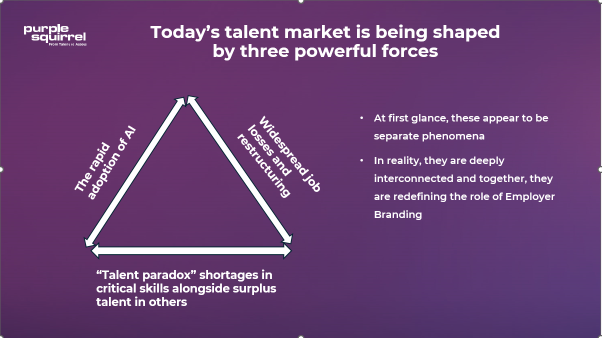
- The first is AI. Roles are being automated, augmented, and redesigned. New skills are emerging faster than organizations can build them.
- The second is workforce restructuring. Organizations are continuously redesigning jobs, teams, and operating models. Transformation is no longer an event. It is a constant.
- The third is the talent paradox. While critical AI, digital, and leadership skills remain scarce, many professionals are struggling to stay relevant.
Together, these forces create a fragile talent ecosystem where:
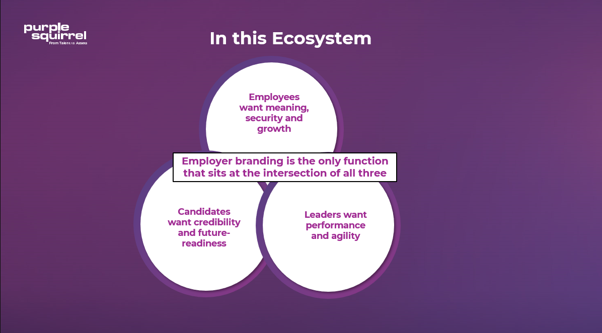
- Employees question their future relevance.
- Candidates question organizational stability.
- Leaders struggle to balance transformation with trust.
Employer Branding Sits at the Centre of the Transformation Agenda
AI drives job redesign.
Job redesign creates disruption.
Disruption creates uncertainty.
Uncertainty erodes trust.
And without trust, AI adoption slows, engagement declines, attrition rises, and hiring becomes harder.
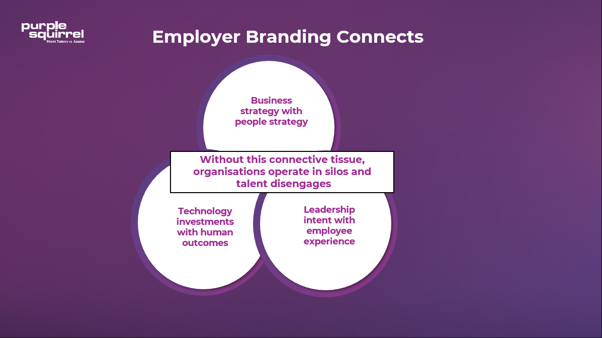
Most organizations address these challenges through technology investments, learning programs, restructuring initiatives, or recruitment campaigns. Yet Employer Branding is the only function that sits at the intersection of all of them.
Its role is no longer limited to attracting talent.
Employer Branding translates technology strategy into a people story. It explains how work is changing, what skills will matter, and how employees can remain relevant. In an era of continuous change, its role is to create clarity where there is uncertainty and confidence where there is disruption.
The Shift from Employer Value to Human Value
An even bigger shift is underway.
As AI generates content, analyses information, writes code, and automates routine work, organizations must answer a fundamental question:
What remains uniquely human?
This may become the defining Employer Branding challenge of the next decade.
The future will not be won by organizations that simply offer careers, compensation, and culture. It will be won by those that help people remain relevant, adaptable, and valuable.
The new challenge is defining Human Value:
- How do people become more valuable because of AI, not despite it?
- How do organizations combine technology with human judgment, creativity, empathy, and leadership?
- How do they help people continuously reinvent themselves?
The future EVP will not simply promise employment.
It will promise employability.
A New Mandate for Leaders
The traditional mandate of Employer Branding was attraction and retention.
The emerging mandate is trust, transformation, employability, and human value creation.
Organizations that succeed will not be those that position themselves as great places to work. They will be those that show people how they can evolve, grow, and create greater value alongside technology.
That is why Employer Branding is no longer an HR initiative.
It is a strategic business capability.
Because in the age of AI, the strongest employer brands will not be those that communicate culture most effectively.
They will be those that answer the question every employee is asking:
How will this organization help me remain relevant and valuable in a future being rewritten by AI?