

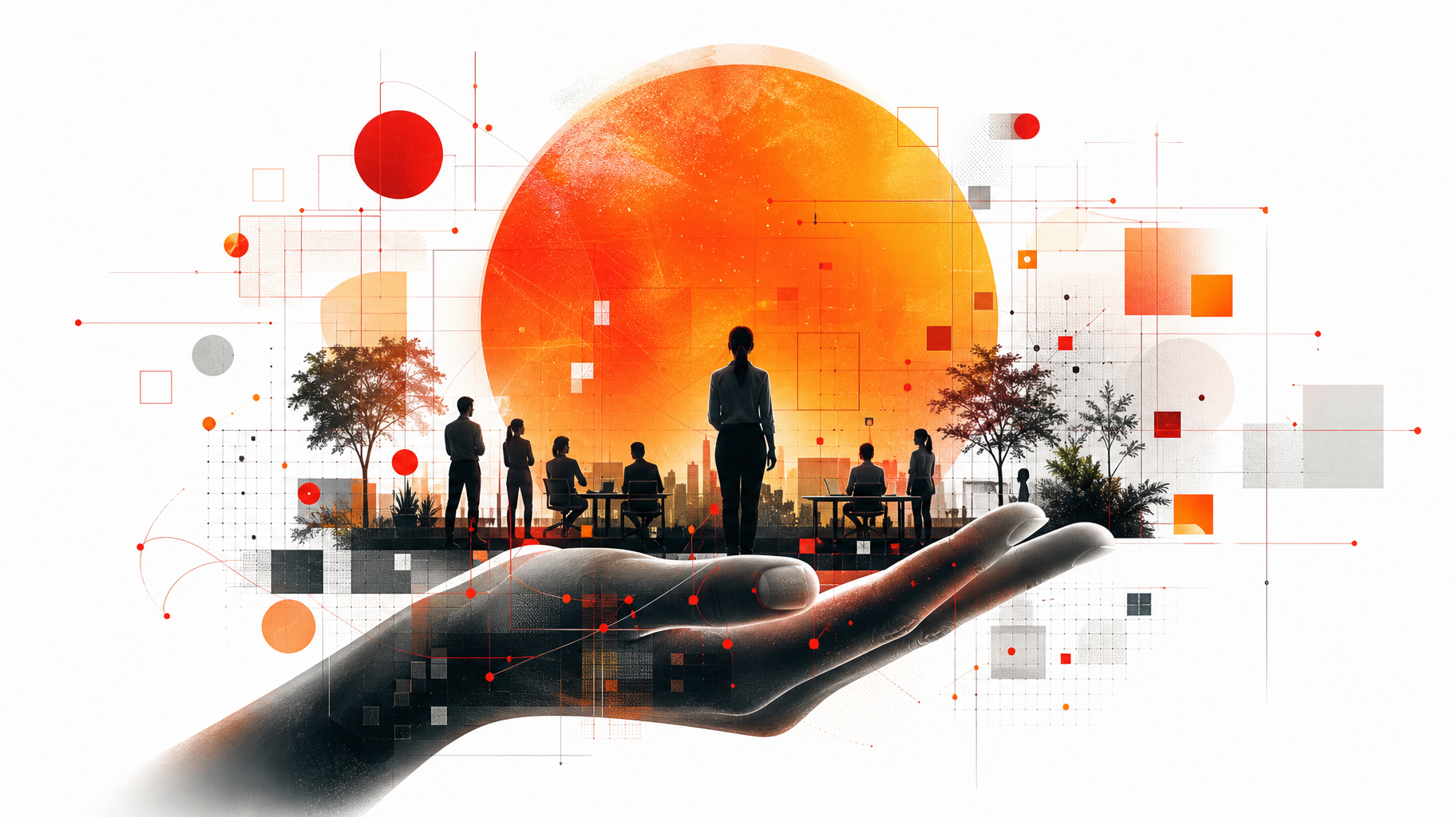
By 2030, the best workplaces will not be defined by impressive offices, generous perks or the latest technology. They will be defined by something more fundamental: how effectively they help people do meaningful work without exhausting the people who do it.
For years, organizations have treated the workplace as a location. The office was the workplace, and everything else was an exception. That idea is already disappearing. In 2030, a great workplace will be a carefully designed system that connects people, technology, culture and purpose—wherever work happens.
Flexibility will be expected, but flexibility alone will not be enough. Employees will want clarity about when they need to be together, when they can work independently and how performance will be measured. The strongest organizations will move beyond debates about “office versus remote” and focus instead on the purpose of each interaction. People will gather in person for collaboration, trust-building, creativity and difficult conversations. They will work remotely when concentration, autonomy and speed matter most.
Technology will play a much larger role, especially artificial intelligence. But the best workplaces will not use AI simply to cut costs or increase output. They will use it to remove repetitive tasks, improve decision-making and give employees more time for judgment, imagination and relationships. AI will become a capable colleague, but human qualities—empathy, ethics, curiosity and courage—will become even more valuable.
This shift will also change leadership. The great manager of 2030 will not be the person with the most answers. It will be the person who creates the conditions for others to succeed. Leaders will need to set clear priorities, communicate context, coach people through change and build trust across distributed teams. They will be judged not only by results, but by whether their teams are learning, adapting and remaining healthy.
Learning itself will become part of everyday work. Skills will evolve too quickly for training to remain an occasional event. Great employers will create continuous learning environments where people can develop new capabilities, move across roles and learn from both humans and intelligent systems. Career paths will become less like ladders and more like networks, allowing employees to grow in different directions without leaving the organization.
Well-being will also move from the margins to the centre of workplace design. A healthy workplace will not be one that offers wellness programs while rewarding overwork. It will be one that designs realistic workloads, protects recovery time and respects the limits of human attention. Psychological safety will matter as much as physical safety, because innovation depends on people being able to speak honestly, challenge assumptions and admit mistakes.
The workplace of 2030 will also be more transparent. Employees will expect to understand how decisions are made, how pay is determined, how data is used and how AI affects their work. Trust will be earned through consistency, not slogans. Companies that say one thing and reward another will lose credibility quickly.
Most importantly, a great workplace will give people a reason to care. Purpose will not mean a polished statement on a wall. It will mean a visible connection between daily work and a worthwhile outcome. Employees will want to know that their effort matters—to customers, communities and the future.
The great workplace of 2030 will therefore be neither fully digital nor fully physical. It will be human by design. Its success will be measured not by how closely people are monitored, but by how strongly they are enabled. The organizations that thrive will be those that combine high performance with trust, flexibility with accountability, and technology with humanity.